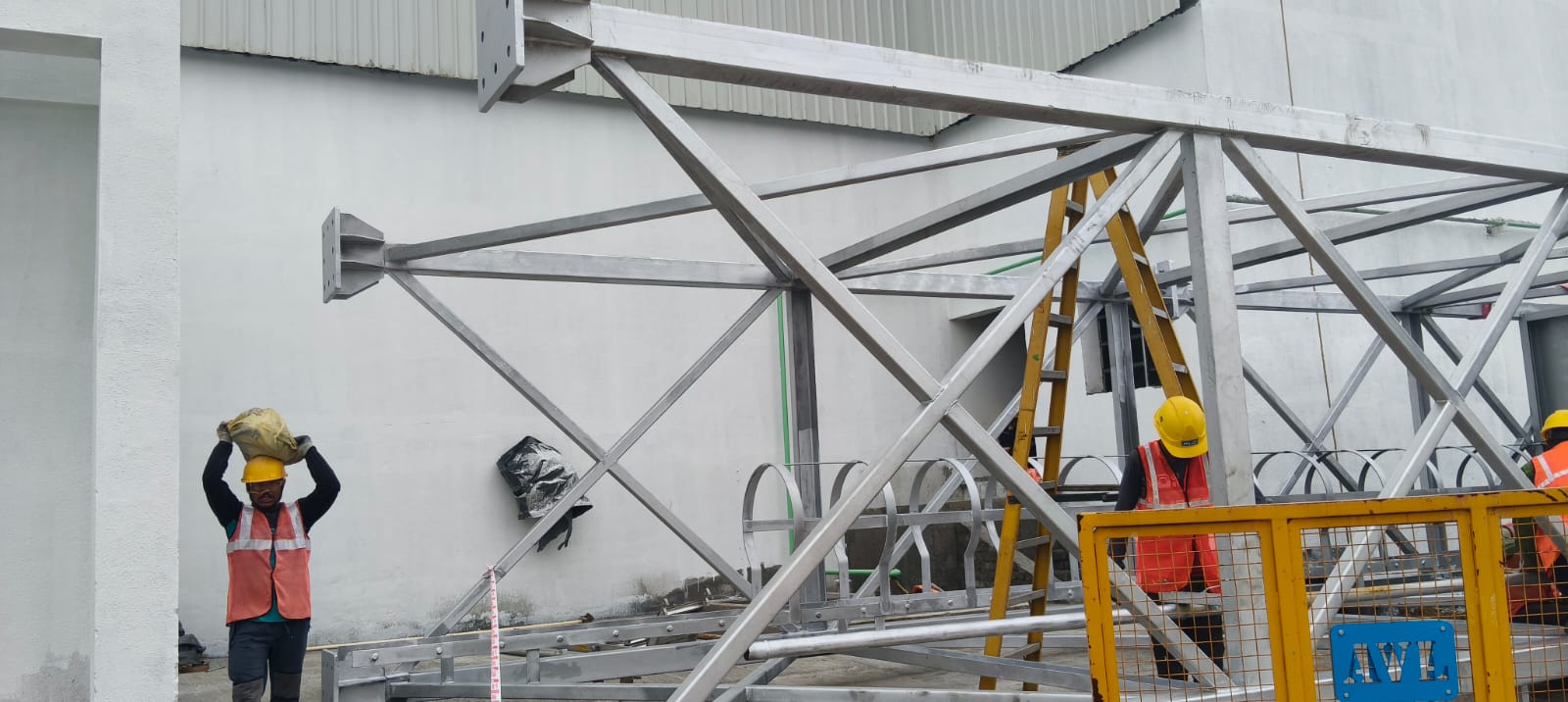
Self-supported chimneys are vertical structures designed to safely discharge flue
gases generated by industrial boilers, generators, furnaces, or other combustion
equipment. These chimneys are freestanding and do not require external support
systems like guy wires or structural bracing.
Typically constructed using mild steel or stainless steel, self-supported chimneys
are engineered for stability, resistance to wind loads, and long-term performance.
They are widely used in industries such as power generation, chemicals, oil & gas,
pharmaceuticals, and food processing. These chimneys comply with emission norms and
ensure environmental safety.

Structural Stability
Designed to withstand wind loads and seismic forces without external
support.

Durable Materials
Built using stainless steel or carbon steel to resist corrosion and
extreme temperatures.

Emission Compliance
Meets environmental norms and flue gas discharge regulations
efficiently.

Low Maintenance
Requires minimal upkeep with long service life and periodic inspection.
FAQ on Self-Supported Chimneys
A self-supported chimney is a vertical exhaust structure
that stands on its own base and requires no external
supports for stability.
They are used in power plants, chemical industries,
refineries, pharmaceutical units, and manufacturing plants
for safe flue gas discharge.
Yes, self-supported chimneys can be designed with various
diameters, heights, materials, and linings based on
project-specific requirements and environmental standards.
Chimneys are typically fabricated using mild steel,
stainless steel, or alloy steel depending on the flue gas
composition, temperature, and environmental exposure.
Yes, periodic inspection and maintenance are recommended to
ensure structural integrity, check for corrosion, and
maintain compliance with emission regulations.