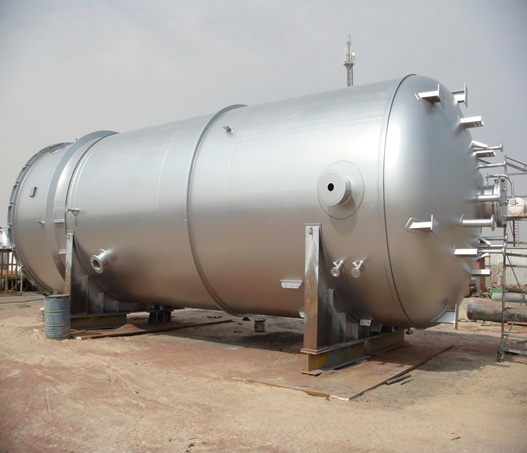
Pressure vessels are specially designed containers used to hold gases or liquids at
a pressure
substantially different from the ambient pressure. They are essential in industries
where safe
storage and transport of pressurized substances is critical.
Typically constructed from high-strength steel, stainless steel, or alloys, pressure
vessels are
engineered to withstand extreme pressures, temperature variations, and corrosive
environments. They
are widely used in oil & gas, chemical processing, power generation,
pharmaceuticals, and food
processing industries, meeting stringent safety and quality standards.

Safety Compliance
Designed and manufactured according to ASME and other international
safety codes.

Durable Construction
Built using corrosion-resistant materials to ensure reliability and long
service life.

Low Maintenance
Designed for minimal upkeep with periodic inspections and servicing.

High Strength
Engineered to handle extreme internal pressures and operational stresses
safely.
FAQ on Pressure Vessels
A pressure vessel is a sealed container designed to hold
gases or liquids at
a pressure different from the surrounding atmosphere.
They are used in industries such as oil & gas, chemical
processing, power
generation, food processing, and pharmaceuticals.
Yes, they can be designed in different sizes, shapes,
materials, and pressure
ratings to meet specific project requirements.
Common materials include carbon steel, stainless steel,
alloy steels, and
composites, depending on the application and medium stored.
Yes, periodic inspections are essential to check for cracks,
corrosion,
leaks, and to maintain compliance with safety regulations.